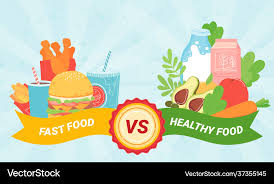
Food plays a vital role in shaping our health, strength, energy levels, mood, and overall well-being. The choices we make every day—whether we eat fruits or junk food, fresh meals or processed snacks—have long-term effects on our body. In today’s fast-moving world, many people are drawn to ready-made meals and packaged foods because they are quick, tasty, and convenient. However, this often leads to unhealthy eating habits. To understand how food affects us, it is important to learn the difference between healthy and unhealthy food, as well as healthy and unhealthy diets.
Healthy Food
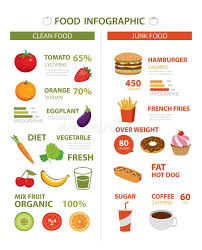
Healthy food refers to items that provide the body with essential nutrients such as vitamins, minerals, proteins, carbohydrates, good fats, and fiber. These foods are usually natural, fresh, and unprocessed. They help the body grow, function well, and fight diseases.
Common examples of healthy food include:
- Fruits and vegetables
- Whole grains like brown rice, oats, and whole wheat
- Lean proteins such as fish, eggs, beans, and chicken
- Healthy fats from nuts, seeds, and olive oil
- Dairy products like milk and yogurt
These foods supply the body with energy without harming internal organs. For example, fruits and vegetables contain antioxidants that help boost immunity and reduce the risk of illnesses. Protein builds muscles and helps repair tissues. Fiber aids digestion and prevents constipation. Healthy fats support the brain, heart, and skin. By eating a variety of healthy foods, we can maintain a strong body and active lifestyle.
Unhealthy Food
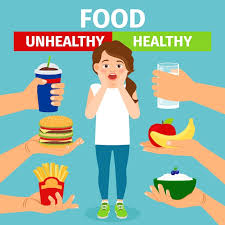
Unhealthy food, also known as junk food, is usually high in sugar, salt, unhealthy fats, artificial flavors, preservatives, and empty calories. These foods taste good and are often cheaper and faster to eat, but they have very low nutritional value. Regular consumption of junk food negatively affects the body.
Examples of unhealthy food include:
- Deep-fried snacks like chips, samosas, and French fries
- Sugary drinks like soda, flavored juices, and energy drinks
- Fast foods such as burgers and pizzas
- Packaged snacks like cookies and instant noodles
- Sweets, chocolates, and desserts in excess
These foods may provide quick energy, but they soon make the body tired and sluggish. Excess sugar and fat can lead to weight gain, high cholesterol, heart diseases, diabetes, and digestive problems. Junk food also affects concentration and may result in poor performance at school or work. Therefore, although unhealthy food may be tempting, it should be eaten rarely and in small quantities.
Healthy Diet
A healthy diet is one that includes a balance of all essential nutrients in appropriate proportions. It is not only about eating healthy food, but also consuming the right amounts at the right time. A healthy diet supports physical growth, mental development, and long-term health.
A good healthy diet includes:
- At least 5 servings of vegetables and fruits every day
- Whole grains instead of refined grains
- Lean protein sources like fish, legumes, tofu, and chicken
- Plenty of water and natural fluids
- Limited sugar, salt, and unhealthy fats
- Regular meals without skipping breakfast
A healthy diet improves metabolism, strengthens bones, enhances brain function, and gives stable energy throughout the day. It also helps control weight and prevents lifestyle diseases. For children and students, it increases focus and learning ability. For adults, it supports long-term health and slows the aging process. Eating at home, where food is freshly prepared, is an important part of maintaining a healthier diet.

Unhealthy Diet
An unhealthy diet is one that lacks essential nutrients and includes too much junk food, sugar, oil, or processed items. Many people today rely on fast food and packaged meals due to busy schedules, lack of awareness, or habit. However, this leads to nutritional imbalance and several health problems.
Signs of an unhealthy diet include:
- Eating very few fruits and vegetables
- Relying mostly on fried and processed food
- Drinking soda or sugary beverages regularly
- Eating too much salt, sugar, and fat
- Skipping meals, especially breakfast
- Eating late at night or overeating junk food
An unhealthy diet contributes to obesity, stress, fatigue, heart problems, poor digestion, and even depression. Children who follow such diets may face stunted growth, lack of concentration, and weaker immunity. Adults are at higher risk of lifestyle diseases such as diabetes, high blood pressure, and cholesterol issues.

Conclusion
Healthy and unhealthy foods have a powerful impact on the body and mind. While healthy food nourishes the body and promotes long-term well-being, unhealthy food may give temporary pleasure but causes serious health issues over time. Similarly, a healthy diet ensures proper balance and variety of nutrients, while an unhealthy diet weakens the body and leads to disease. To maintain good health, everyone must make smart eating choices—include fresh vegetables, fruits, whole grains, and lean proteins, and reduce sugary, fried, and processed foods. Eating wisely today builds a stronger, happier, and healthier tomorrow.